
B2B Lead Gen
Magnet for B2B Lead Gen
Replace long forms with conversations that qualify, route, and convert. Collect the same information in half the time.
Long Forms Kill Conversion. Short Forms Miss Context.
You know the tradeoff. A long form gets you qualified leads but tanks your conversion rate. A short form gets volume but buries your team in unqualified noise. Magnet eliminates the tradeoff.
A conversational flow collects the same information as a 10-field form, but each question builds on the last. It feels fast because it’s relevant. The prospect doesn’t think “I’m filling out a form.” They think “this company is paying attention.”
Use cases
How Can Magnet Help Me…?

The magnet replaces the static form below your hero.

Challenge, timeline, and budget, branched on answers.

High-intent leads route to sales instantly.
A conversation, not a form wall.
'What topic interests you most?' leads to the right resource.
The email capture happens naturally in the flow.
One question at a time, each one earning the next.
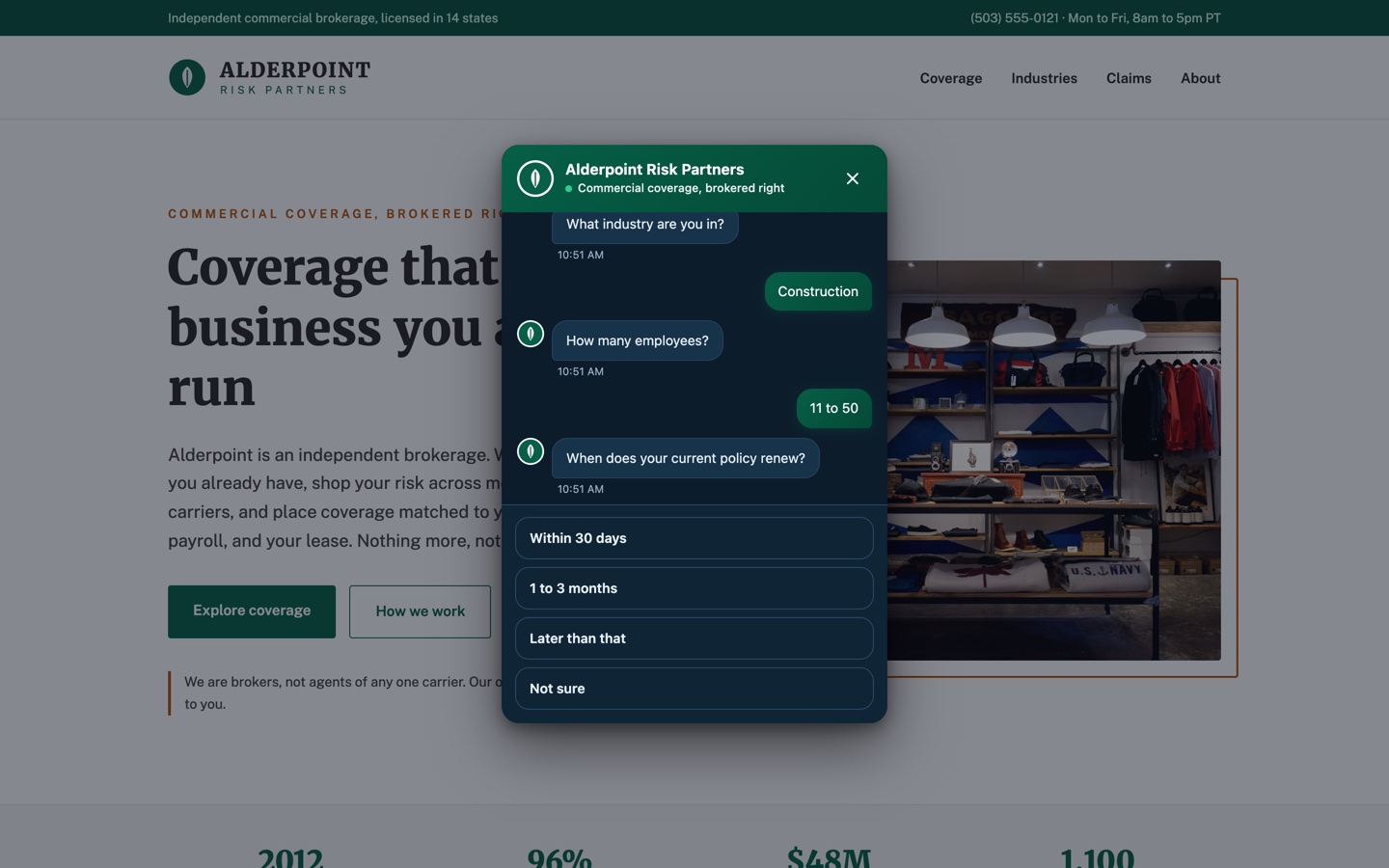
A '50+ employees' answer changes what gets asked next.
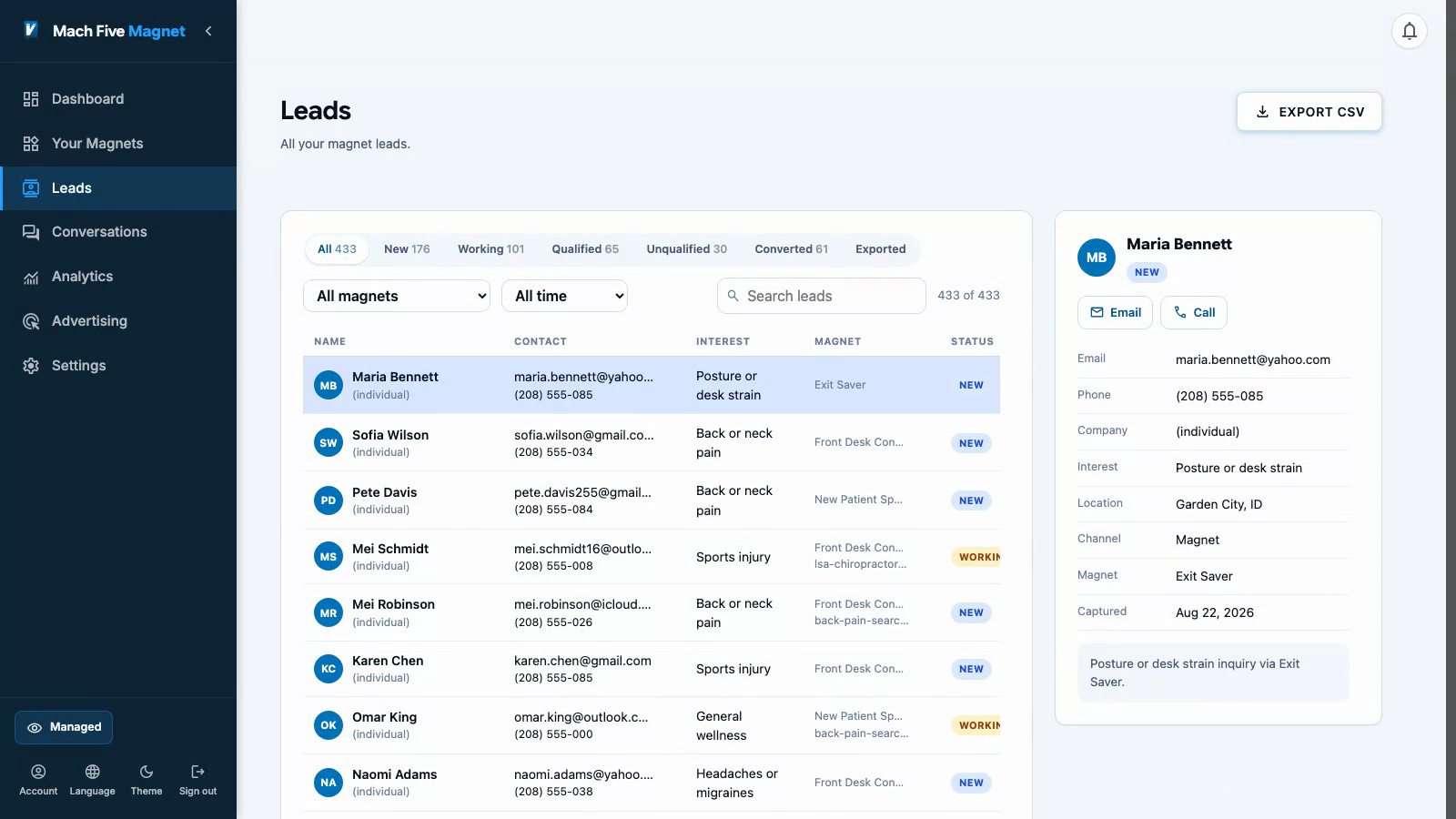
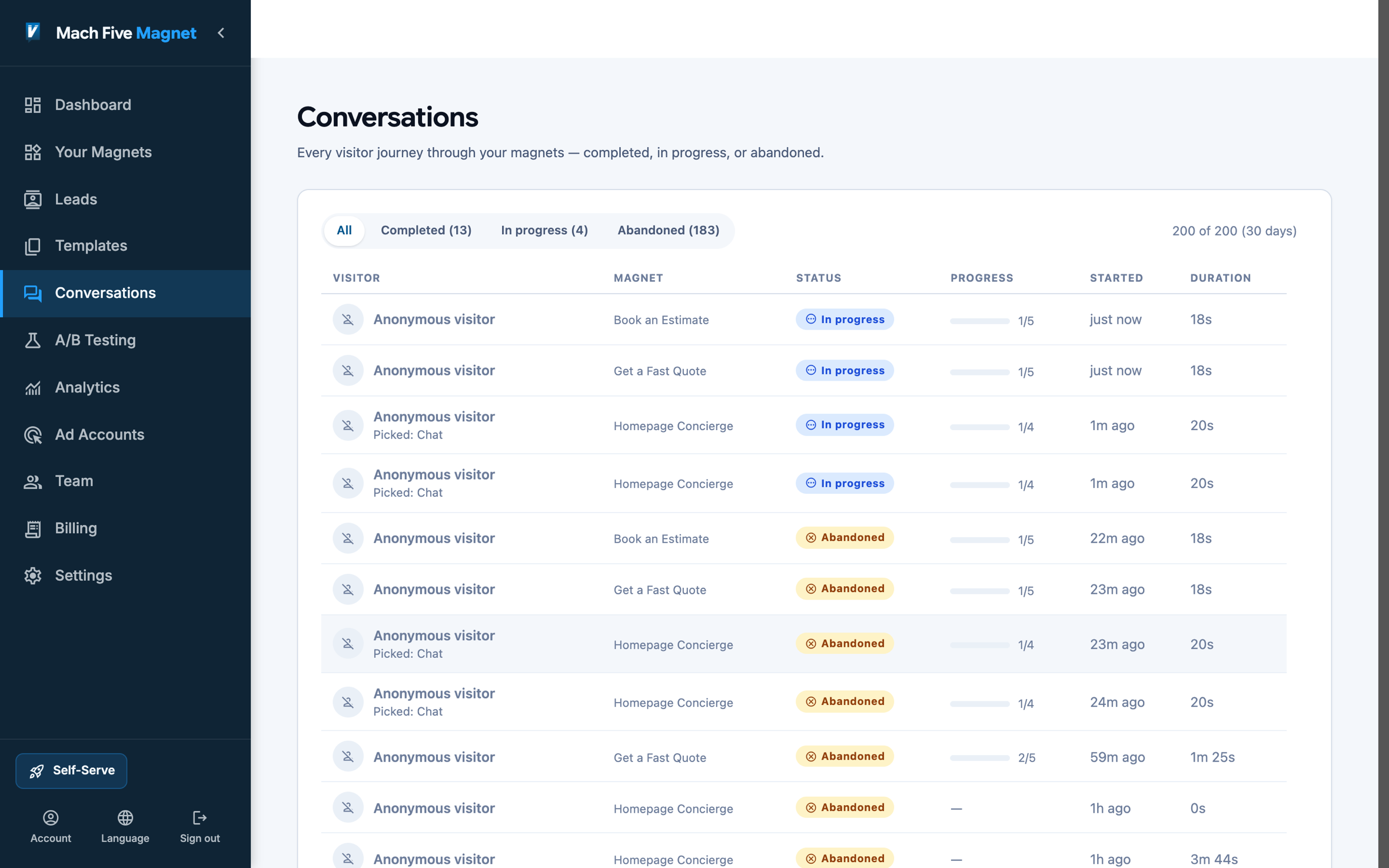
Every lead lands with the full conversation attached.
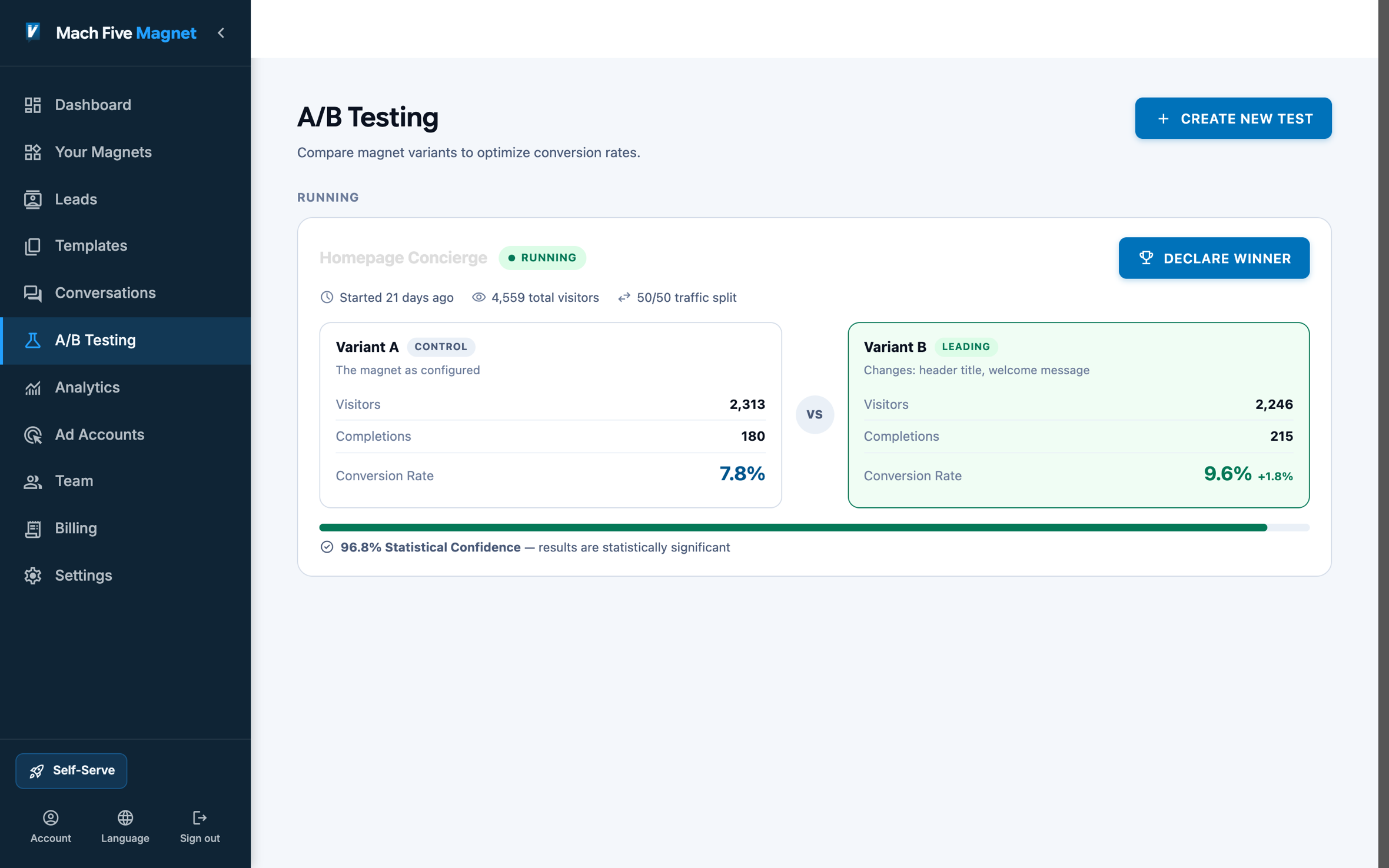
Run two variants per magnet.
Each visitor gets a consistent split, scored on the same funnel.
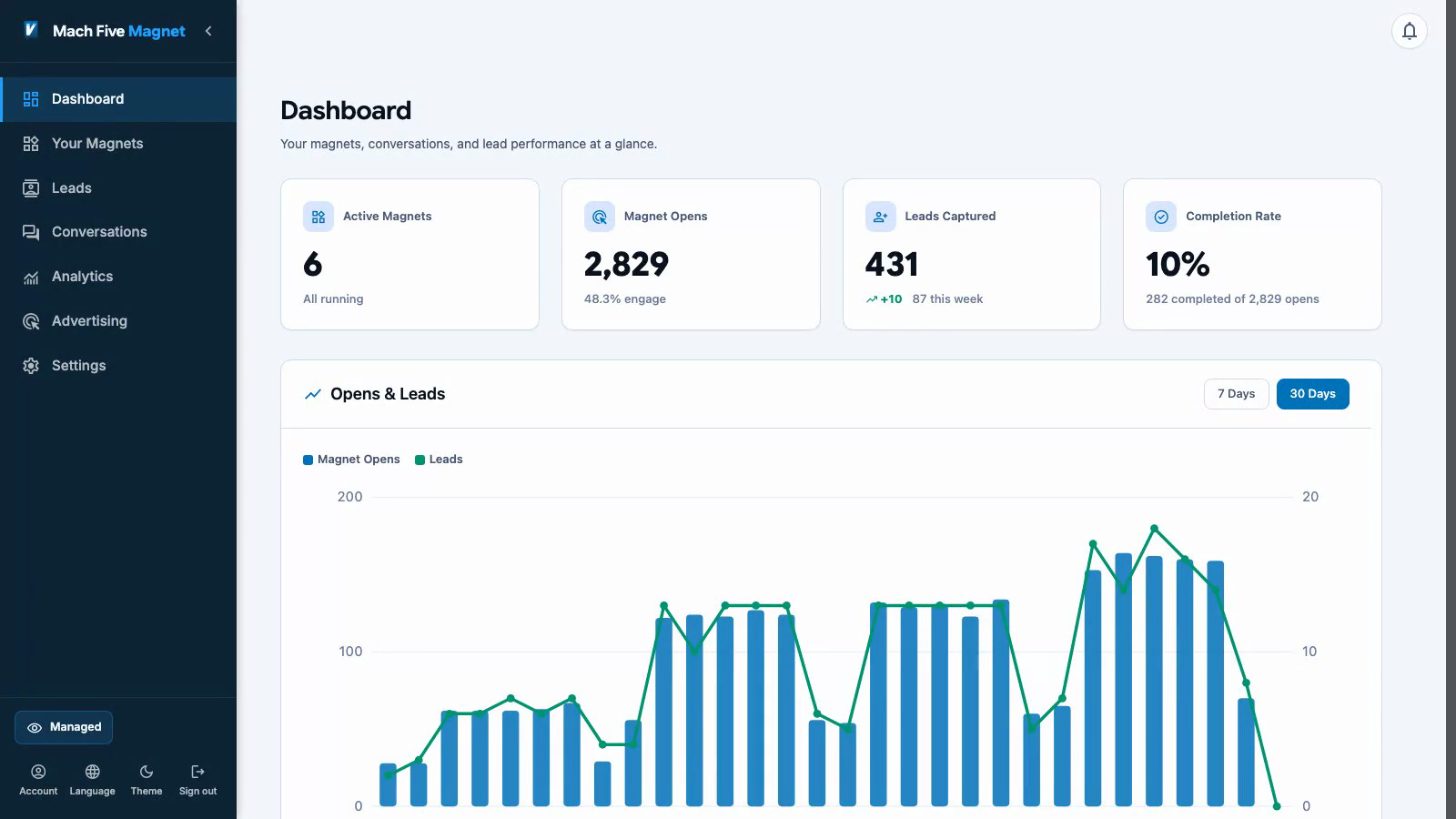
Declare the winner in one click.
Connects With Your Stack
Install through Google Tag Manager or a single script tag on any landing page. Every lead carries UTM parameters and Google Ads click IDs, so attribution survives the handoff. Leads sync to your CRM with the conversation attached, captured and qualified leads are sent back to Google Ads as conversions, and a signed webhook sends every lead to Zapier or your own endpoint.
Put a magnet on your site today.
Free plan. One script tag. No code.
Example builds
Four Example Builds
Four ways B2B Lead Gen teams put a magnet to work. Step through each build, then open the live page and play the real flow.

Step 1A procurement visitor sizing up capabilities. The quote button follows them.
Step 2The RFQ starts as a conversation: what are you sourcing?
Step 3Timeline and company, the two answers every estimator needs first.
Step 4A complete RFQ in four answers. It lands in the inbox with everything attached.
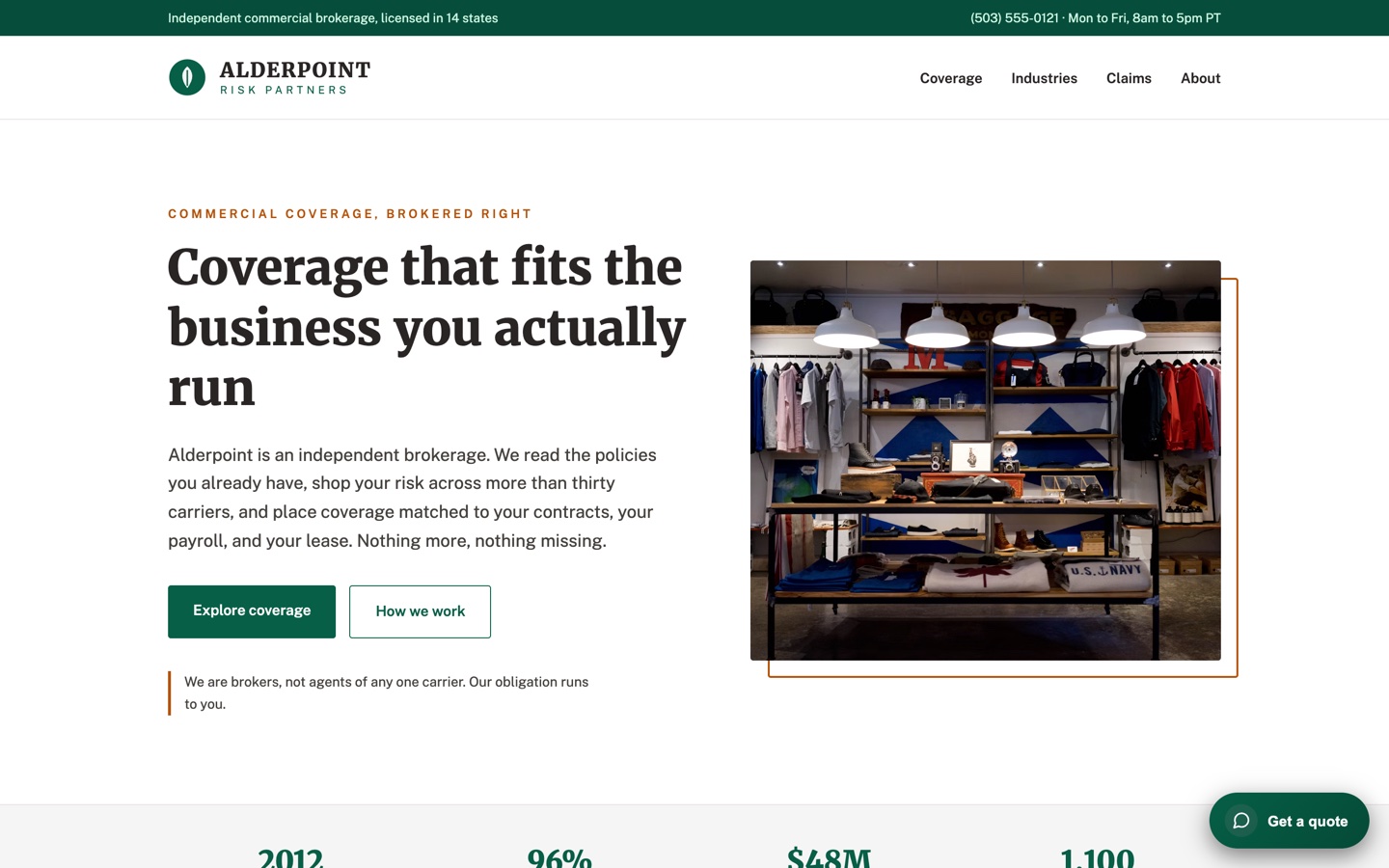
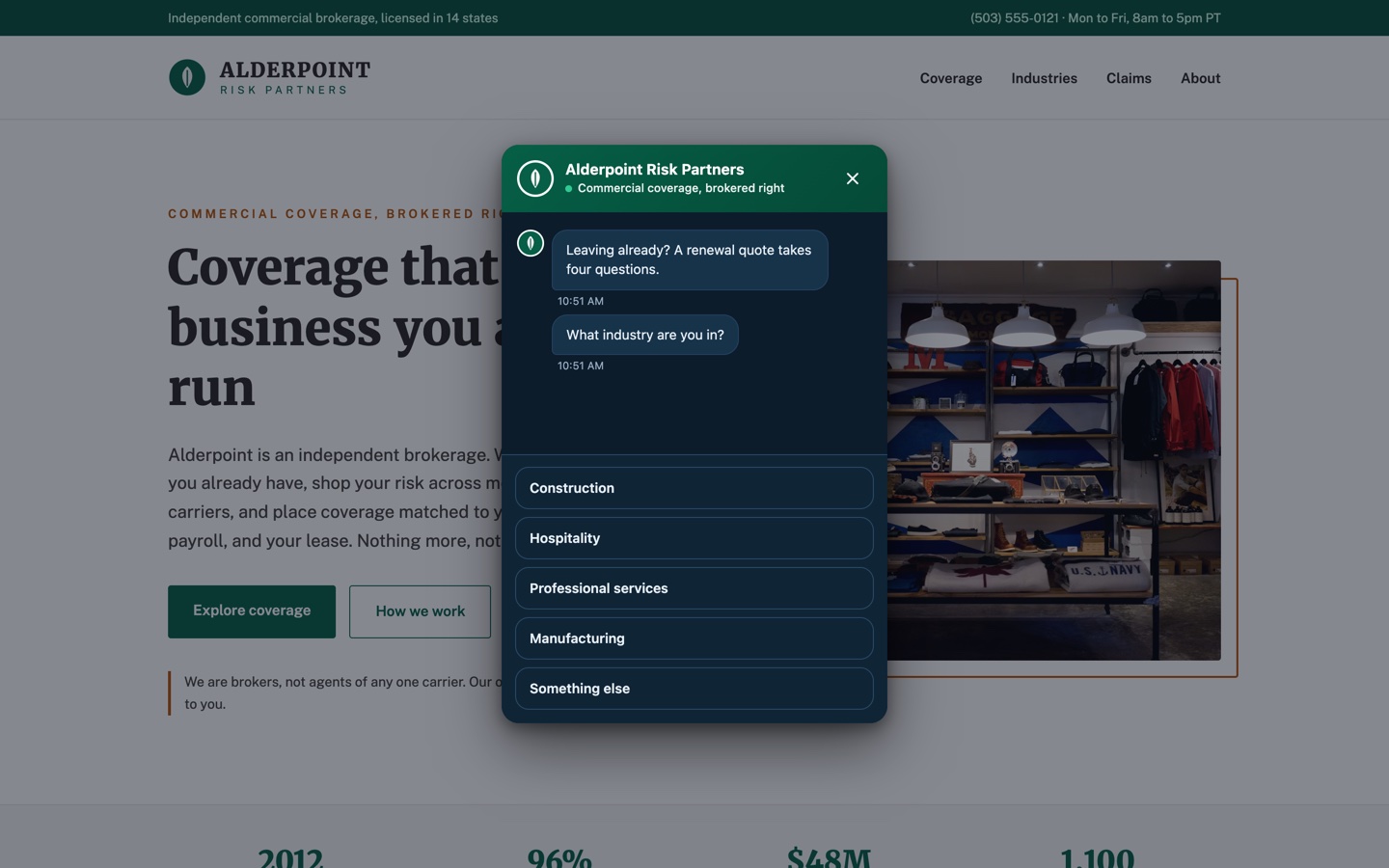
Step 1A visitor compares brokers in another tab. This page is about to lose them.
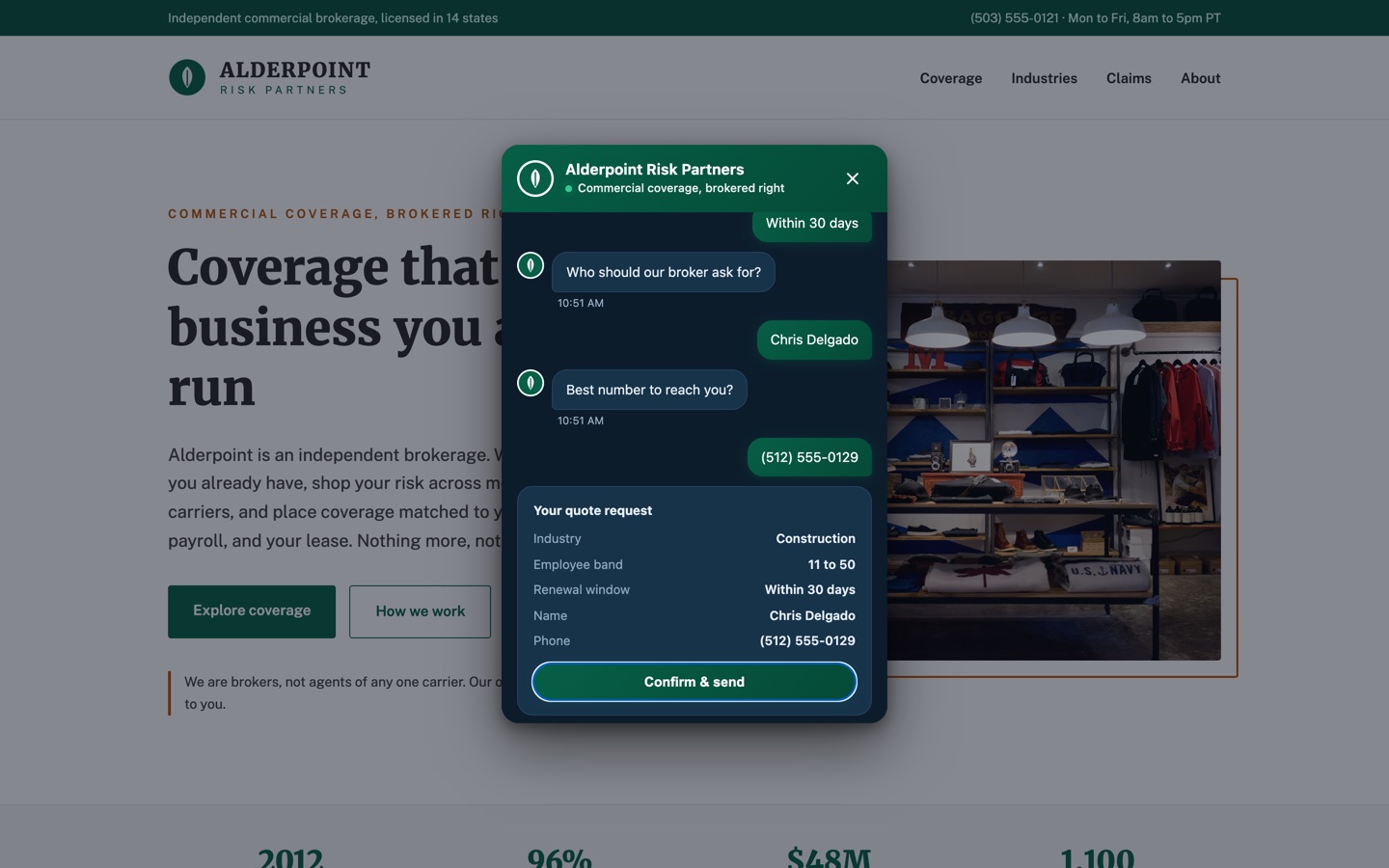
Step 2Exit intent opens one question, not a plea. Industry first.
Step 3The renewal window is the answer that prices the lead. It gets asked while attention lasts.
Step 4Four answers become a quote request with a name, number, and renewal date.
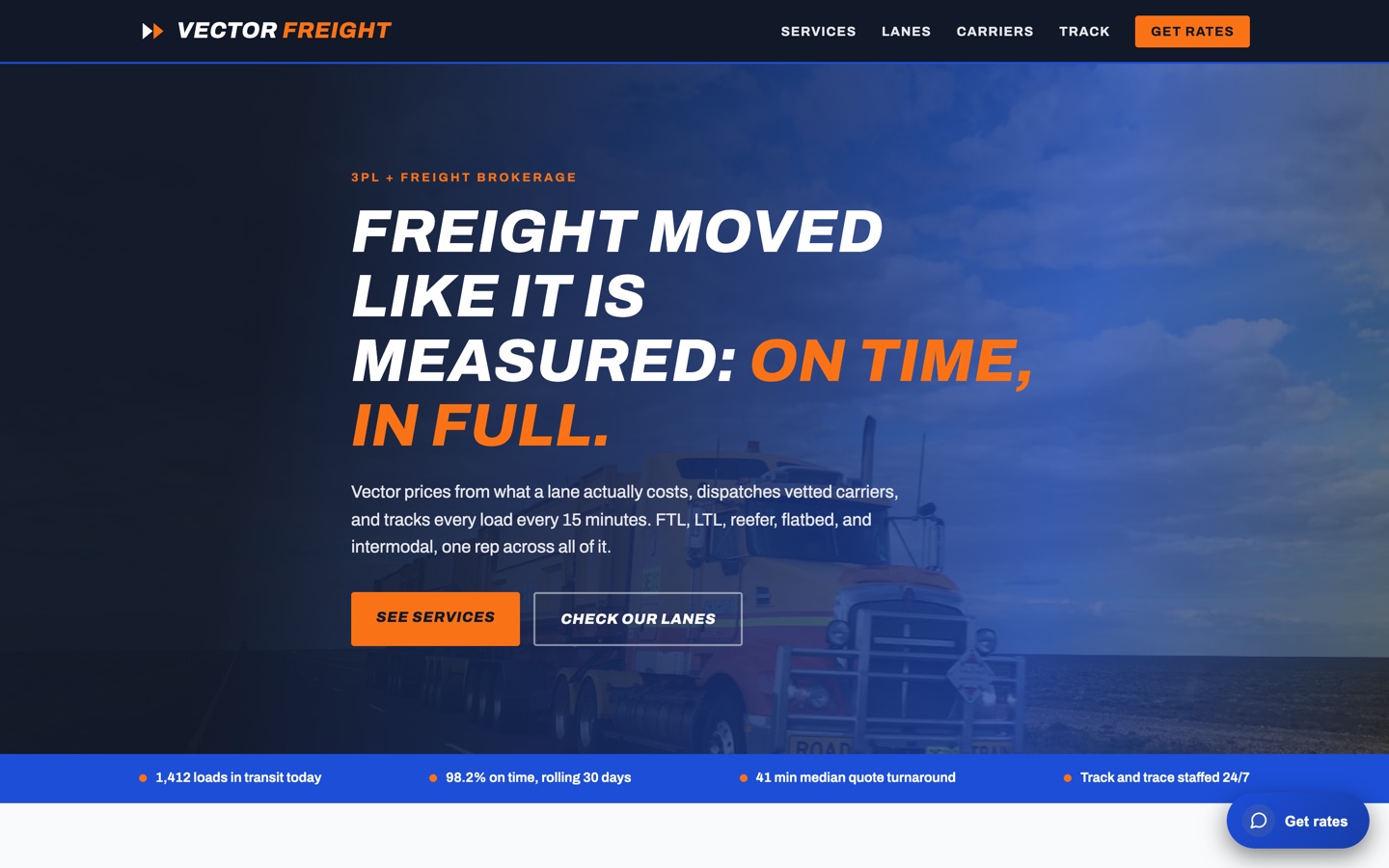
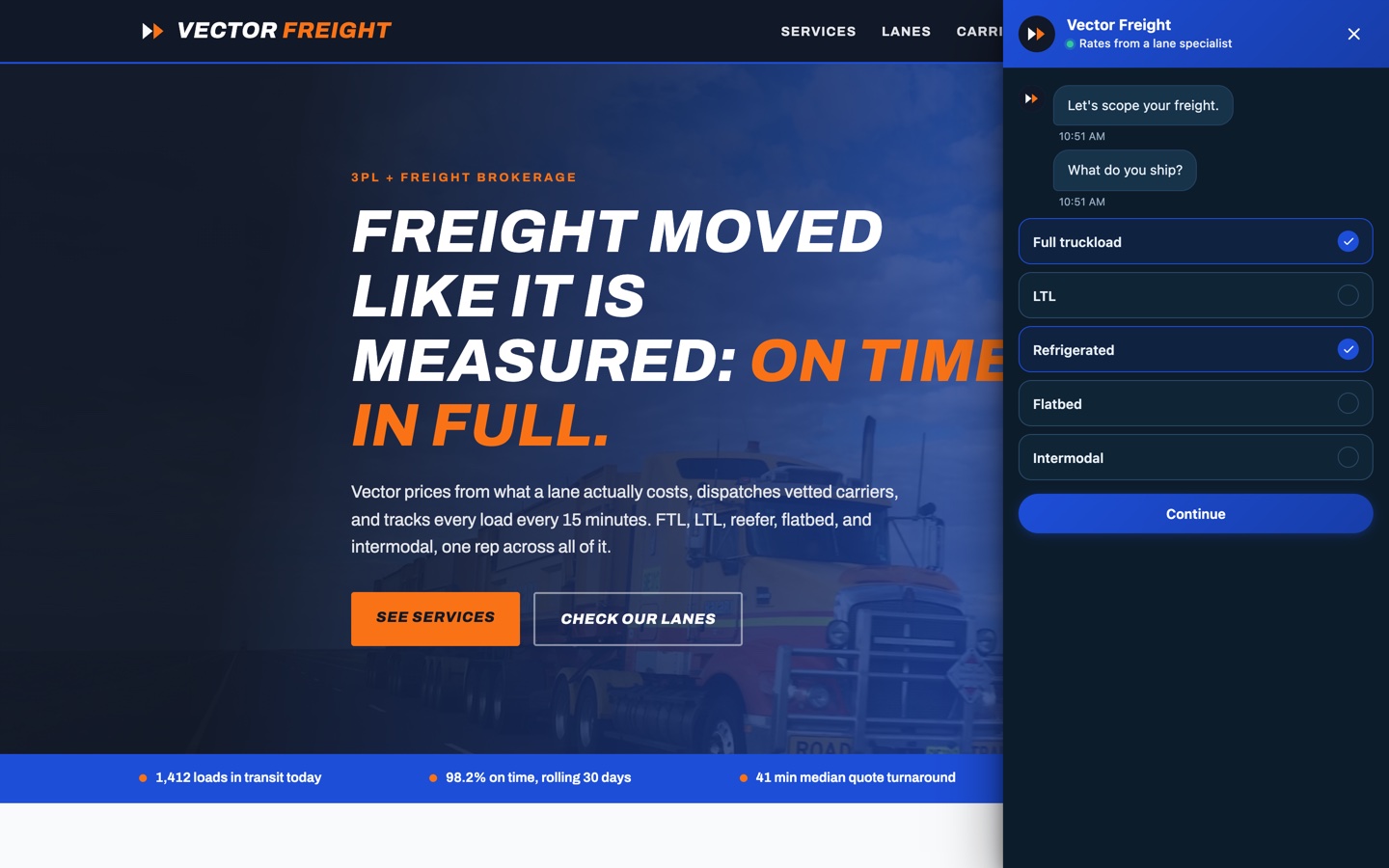
Step 1A logistics manager checks lanes and stats. The panel earns its moment.
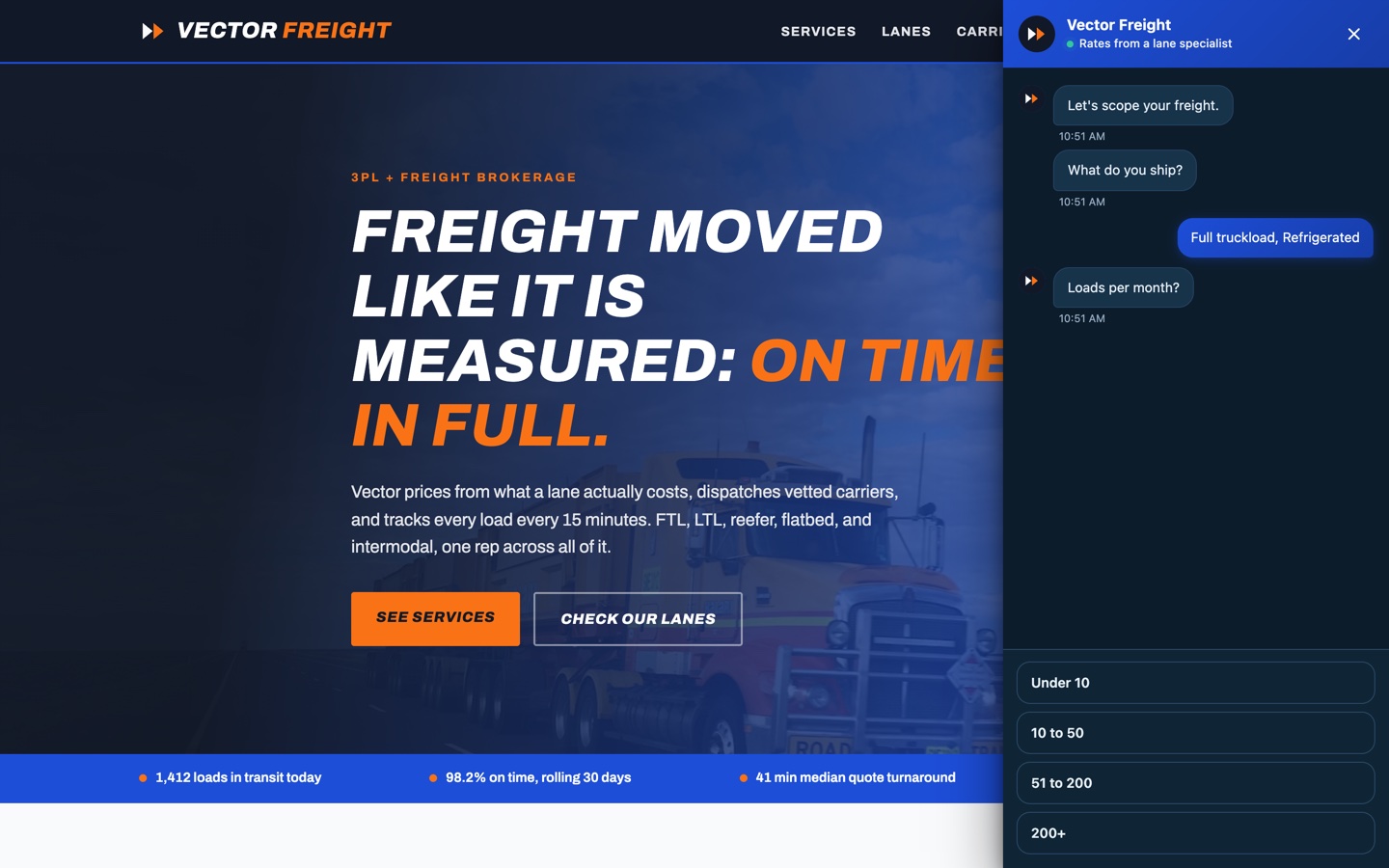
Step 2At 80% scroll: what do you ship? Multi-select, because freight is never one thing.
Step 3Volume banding turns a visitor into a priced opportunity.
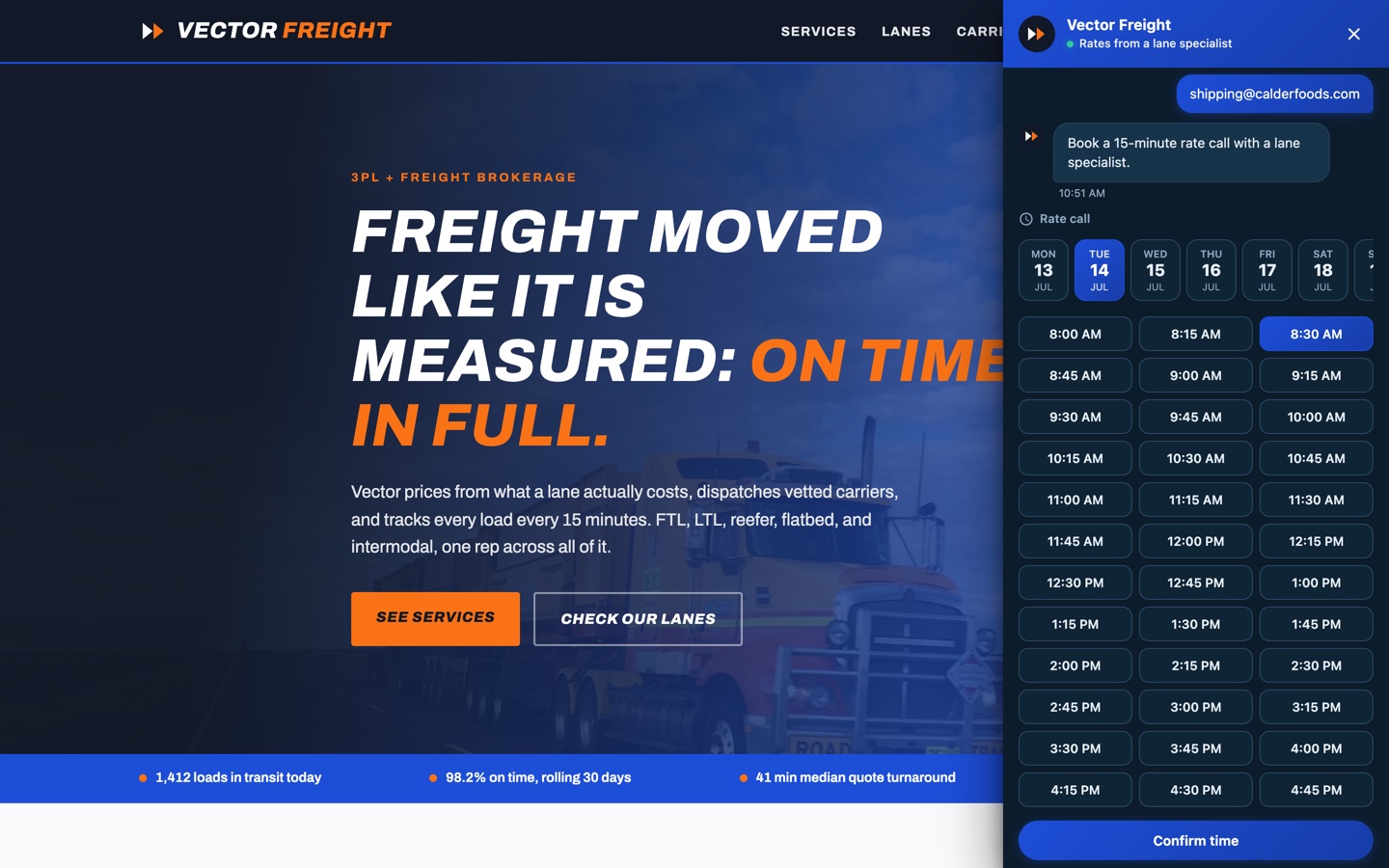
Step 4Rate sheet requested, specialist call booked. The lead arrives scoped.
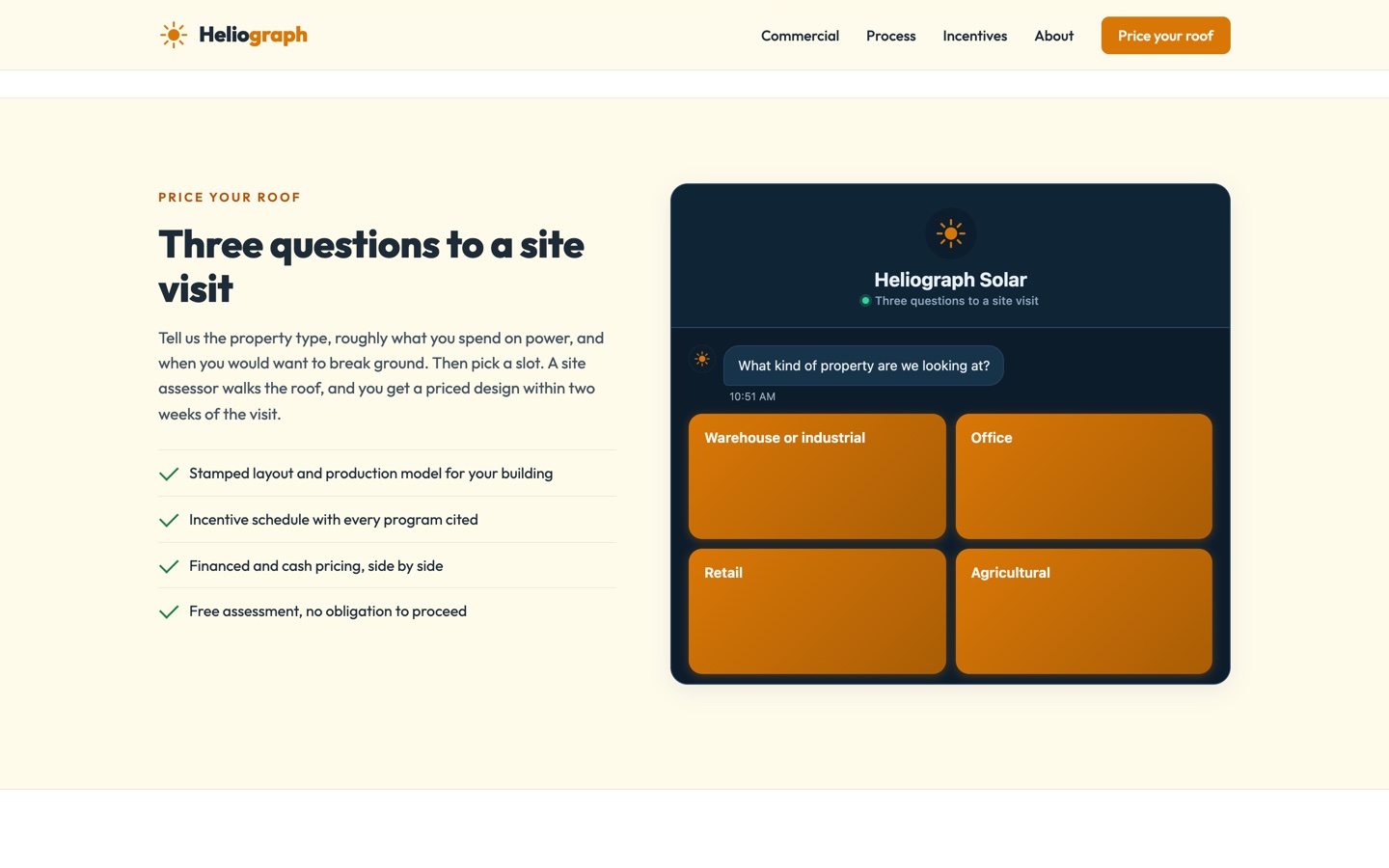
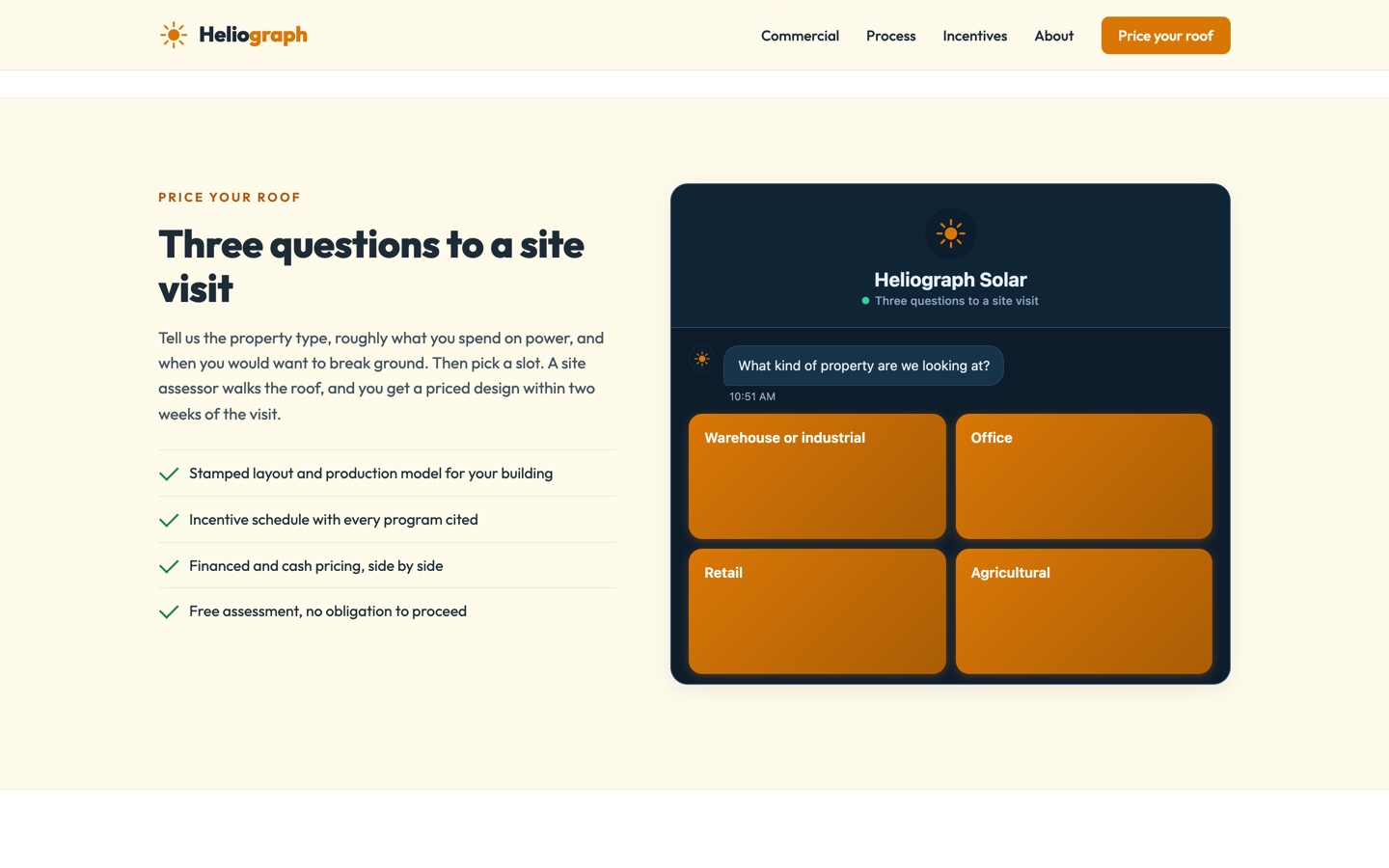
Step 1Price your roof sits inline, right where the visitor is doing the math.
Step 2Property type first, the way a real site assessor would start.
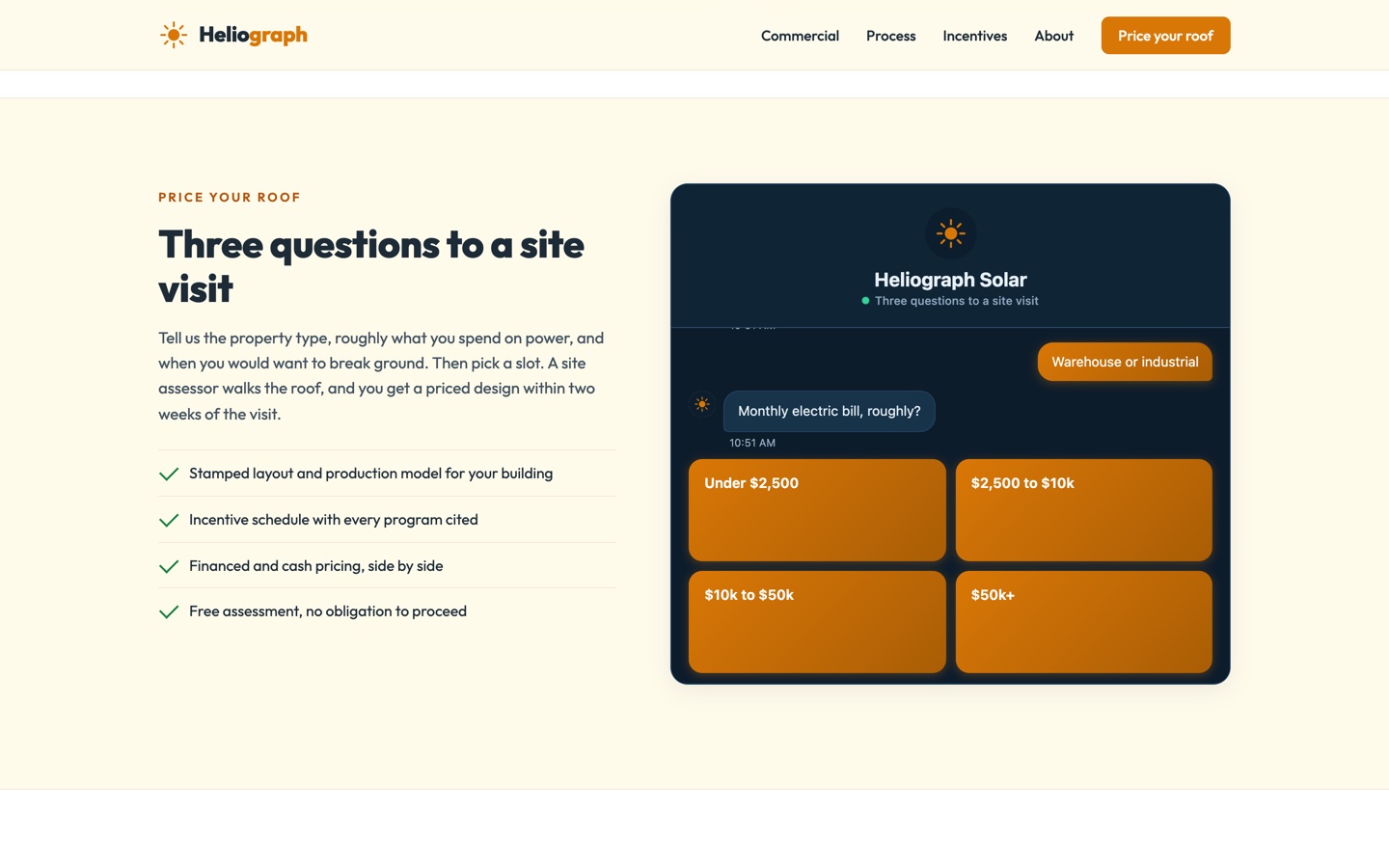
Step 3The utility-spend band does the qualifying without a single form field.
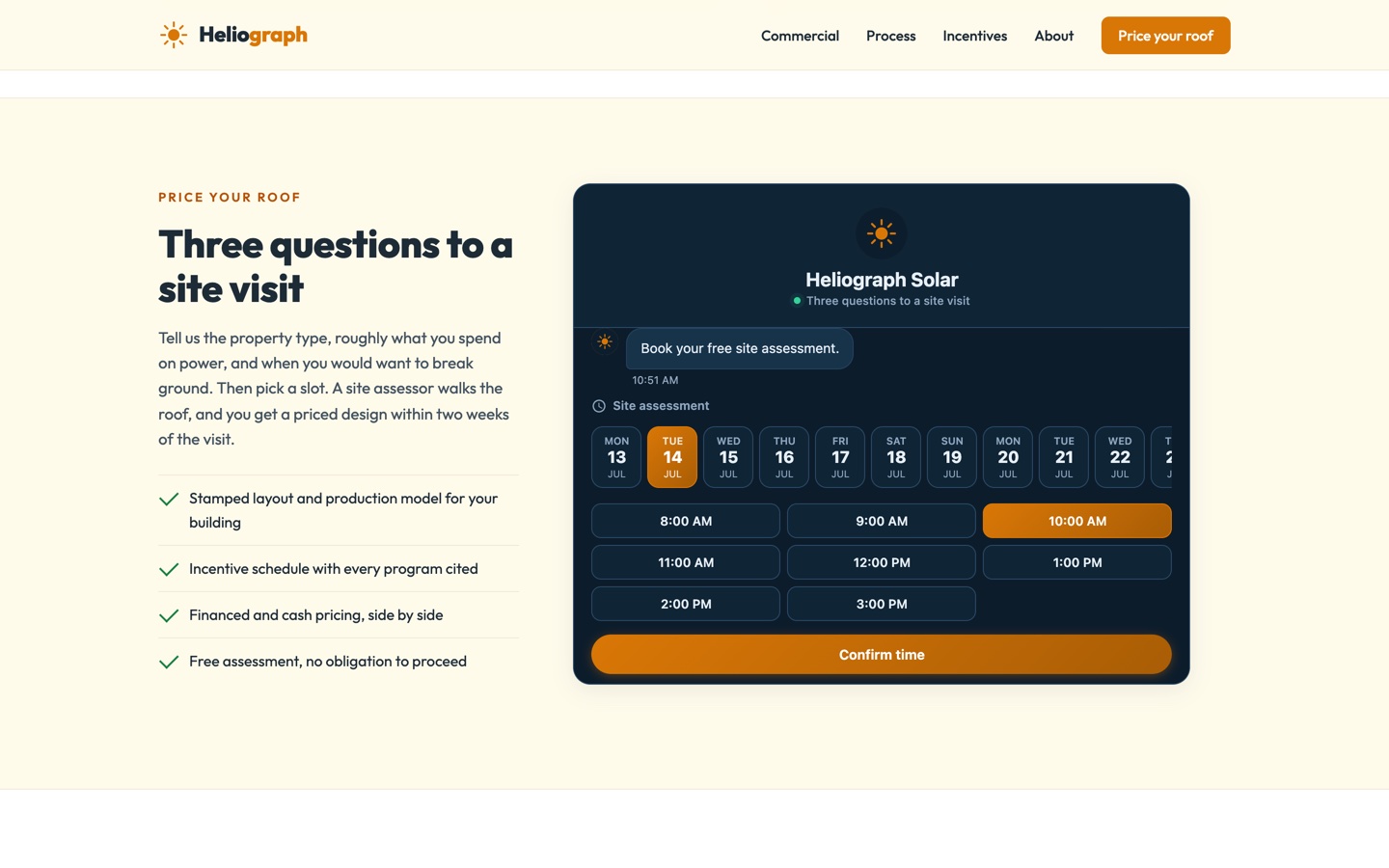
Step 4A site visit on the calendar and a spend profile on the lead.
Ready to replace your forms?
Build your first flow in minutes. No credit card required.